Not Everyone Learns the Same

Not everyone learns the same.

We recently returned from a camp in which we were trying to teach about serving God by serving others. I have preached or taught a lot in the past about how we need to be serving others. Now I wanted to give our students an opportunity to learn by doing.

We went to Nashville and served at the Nashville Rescue Mission. We sorted clothes and other things in their warehouse to help their various ministries that they have there.

We went to a ministry called Hope House in Bowling Green and helped in their thrift store as well as their back room. The guys got sweaty and dirty while moving a ton of garbage for them.

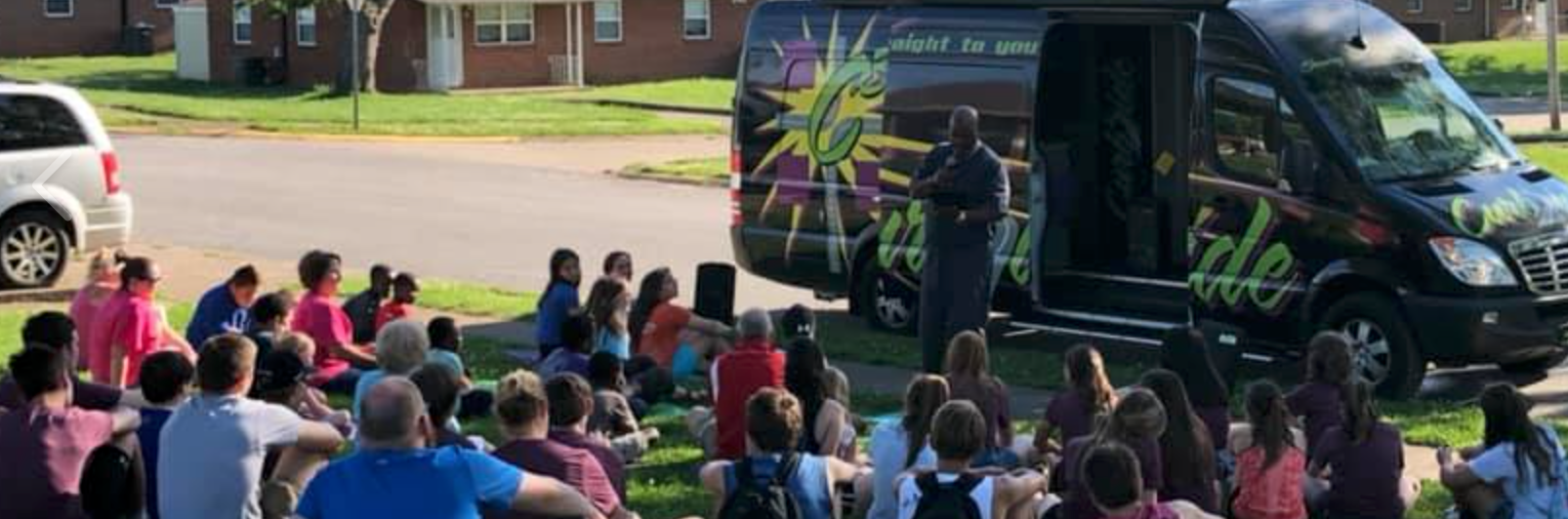
Then we spent an afternoon helping with a ministry called Curbside Ministries. We played with kids and talked with them about life.

Overall, our students each participated in over 6 hours of community service while we were on our trip.

Something interesting that happened was that one of the students told my wife Janell that he had been in church a lot during his lifetime. He had heard a lot of sermons about serving others. But that he never really realized what we meant by that until camp this year.

My takeaway from this is that sometimes it takes experiential learning. It takes doing something rather than just hearing. It takes seeing it in action. When we say to “love our neighbor,” often, we need to exhibit that and model that for students. We cannot simply rely on telling people that Jesus loves them or that they need to do certain things or make specific changes, we need to help them actually do those things in order for it to sink in deep to their very being.

My prayer is that our camp experience will help students have a heart for others and see what it means to really, truly, love God with all their heart, strength, and mind. And what it means to love their neighbor as themselves.
Thoughts about Greeting Time at Church

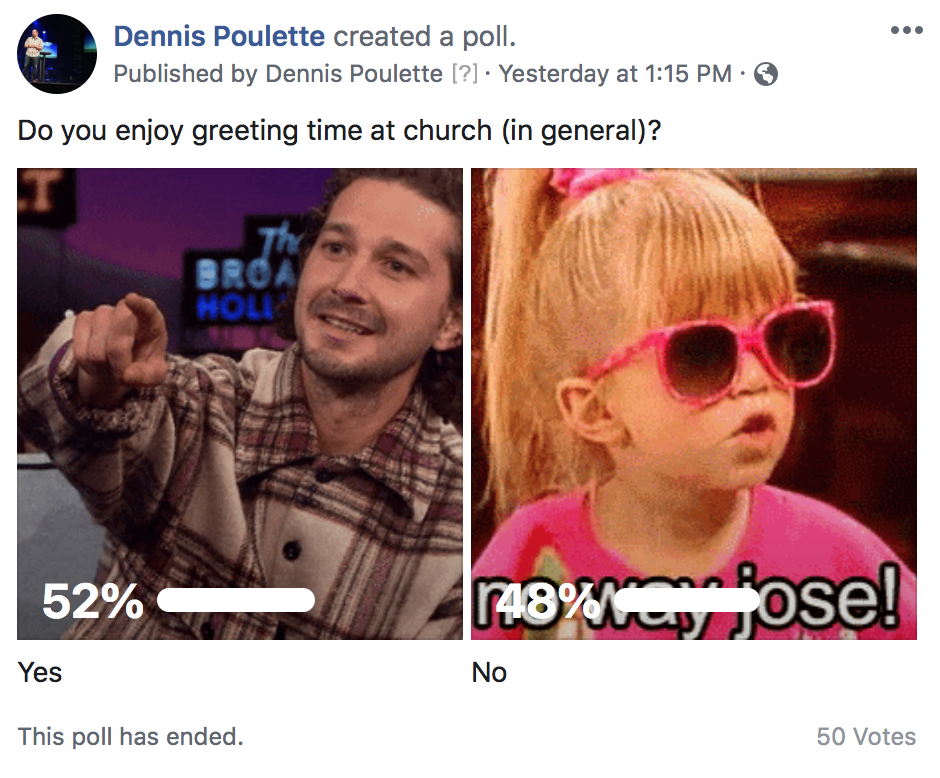
I posted a poll on my Facebook page about church greeting times. It got a pretty good reaction and prompted some interesting conversations. I’m not going to rehash all of the conversations we had on Facebook here, but I do want to make a few observations about it based on the question. 

Here’s the poll:


Three Thoughts:

1. The vote was practically split 50/50. If this is true, it means that half of the people in church probably feel the same way you do about this, and half of them probably don’t. If you love it, understand that there’s 50% who probably hate it. If you hate it, there’s probably 50% who love it. Good thing it’s not about you (or me). 

2. Age and demographic doesn’t really have much to do with it. It was split down the line, and it wasn’t all young people who hate it or all older people who hate it (or love it). This tells me, again, that this isn’t about ages or demographic. It’s an opinion, and it’s not even generational. 

3. Some of the people who voted that they DON’T like the greeting time are pastors. I’ll let you draw your conclusions about that one. 

There’s a lot we could say about church greeting time. I’m not sure we can judge a church’s “friendliness” on how the greeting time goes.

This summer we’ve been experimenting a little with that time at our church. We’ve given more time, tried to guide the discussion by giving talking points, and other things. It’s not perfect, and not everyone likes it. But some people have really started connecting better because of the things we’re doing. Others might think it’s the worst thing ever.

I don’t know. We’re just trying to listen to people, follow what we think God is showing us to do, and connecting with each other along the way.


The New Ministry Leaders

This past Monday was our first leadership team meeting of the summer. We have a lot of great plans for the summer, but this week we just sat together at a Starbucks and talked about the many things that are going on in our lives as well as some of what we’ll be doing at camp next week as well as during our leadership meetings later this summer.

One of the topics we talked about was what spiritual leadership is going to look like in the future. When I was a kid, if you wanted to make an impact for the Kingdom of God, it was expected that you would be a missionary or a pastor. You would go to Seminary and study, look for a “full time ministry position,” and boom, you’d be a spiritual leader.

While those are still viable options, it’s pretty obvious that not all people who feel God calling them to impact the world can or should follow that path. In fact, some schools like Liberty University are cutting divinity school faculty due to lack of enrollment. I think every student ought to consider and be open to “full time Christian ministry,” but the Church should face the reality that not every committed student is going to be a pastor or missionary.

That’s where the new ministry leaders come in. I often dream about this.

What if Ninja used his influence for the Kingdom of God? He’s a streamer on Twitch who, as of May 2019, averaged 40,000 viewers per week.

What if Jeff Bezos (founder of Amazon) openly talked about Jesus? (To be clear, I’m not saying he is not a Christian. I do not know him or his religious beliefs).

What I’m saying is that the next generation of ministry leaders just might be the kind of people who live out their faith and use their cultural influence to share the gospel in ways that are not what we have traditionally thought of as “ministry.”

There are many examples of people who are doing that, both on a large and small scale.

If we look to sports, we find people like Tim Tebow, Tony Dungy, Dikembe Mutombo, and Steph Curry.

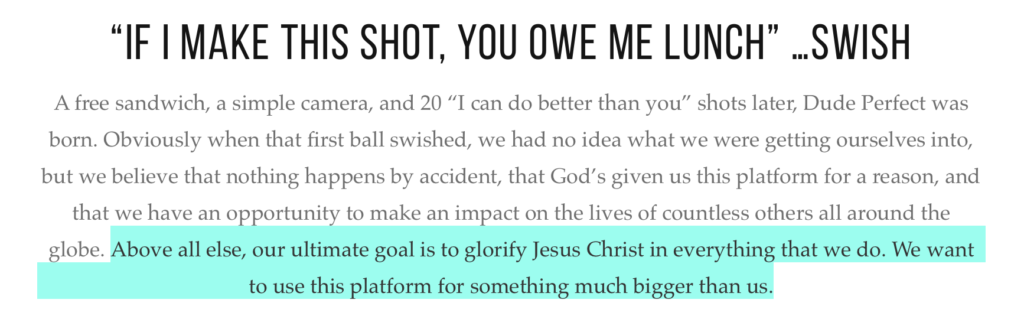
The Dude Perfect guys who have over 42 million subscribers on YouTube, state that they do what they do to “glorify Jesus Christ in all that we do.”

I also personally know lawyers, doctors, school teachers, coffee shop owners, and others who are using their gifts and talents for the Kingdom of God. They are the new ministry leaders.

I don’t know what the future holds for the student leaders in our ministry, but my prayer is that, no matter what career path they choose, they will use it to influence the culture and those around them with the gospel of Jesus Christ.

Why Do We Create?

This week I was thinking the human mind (I know…meta, right?).

For some reason, I became fixated about the fact that what you think in your head, if you put in the work, can become a physical reality.

This morning, as I was explaining this idea to my son in the car, we passed by downtown Louisville. I explained it like this. “See that building (talking about the Mercer building for those who live in the ‘ville)…before it was a building, it was an idea in someone’s head. But then they created something physical out of their idea.”

I kept explaining to him how I believe that creating is something shows that we are made in the image of God, the Creator. He said to me, “And it all comes back around to Jesus.” He was half-joking, but I told him that, because of my Christian worldview, of course everything comes back around to Jesus (but that’s not really the point of this post).

I continued explaining that our dog doesn’t wake up in the morning and have the desire to create music or art or buildings. She really just wants to chase the rabbits in our back yard. Really, when you think about it, animals do not create the way that humans do.

We have a desire to create things because in our creation we are mimicking our creator. We are being like God when we create. Since my son was on his way to a band camp, I was explaining that his trumpet playing was also worshipping God today. He will be creating music, and that is something that my dog would never do.

Anytime you create…you are worshipping and being like your creator. If you are building or designing or playing music or painting or creating YouTube videos or drawing or speaking, you are creatively being like your Creator.

So always be creating. Those ideas you have in your head are given to you by God. He is the ultimate Creator, and, as His image-bearer, you and I have a desire–dare I say a need–to create.

Giving out of a Grateful Heart

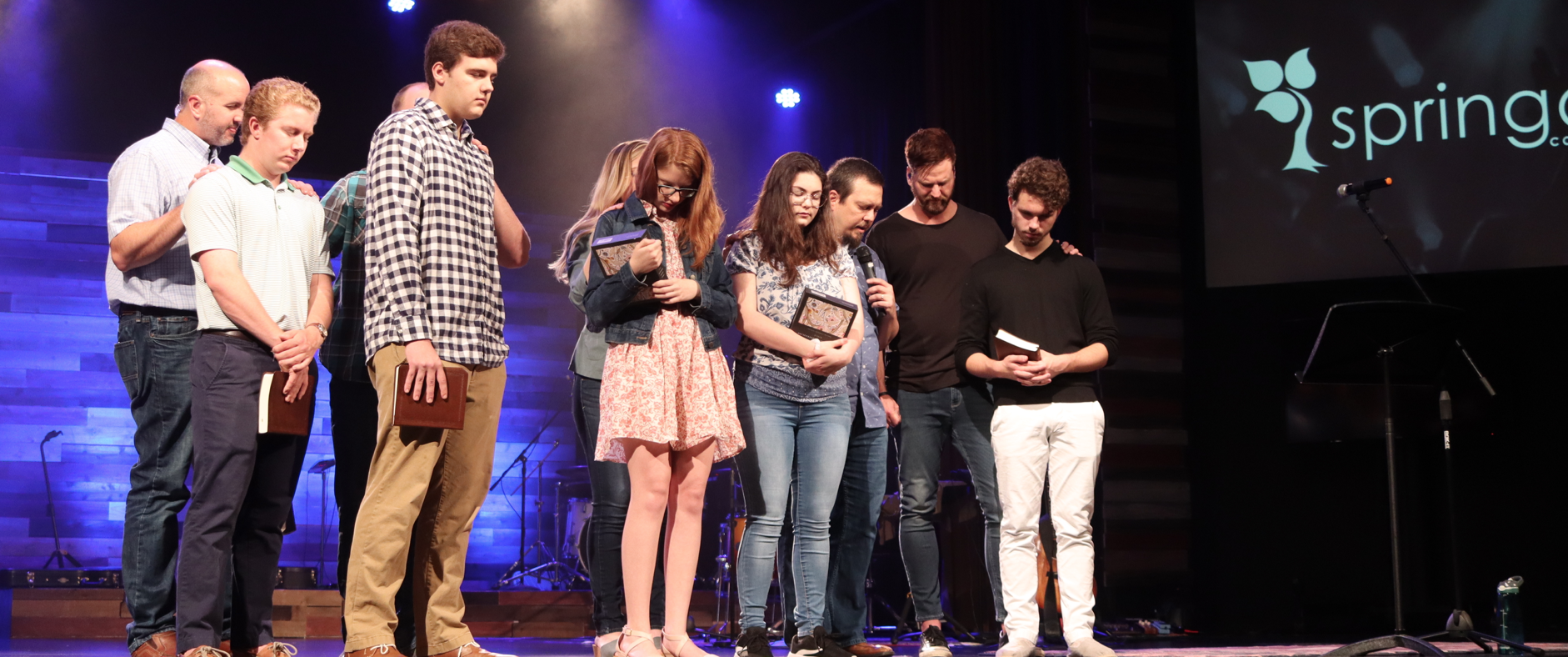
On Sunday, we honored our graduates (see pic above) and prayed for them as they step out in faith on the next step of their journey.

After that, John continued the series called “The Process: Becoming More Like Jesus” by speaking about giving of our treasures for Kingdom purposes.

His main points were the following:

1. We are managers, not owners. It’s important to remember that everything we have is God’s to begin with and that He has graciously given us the possessions we have to manage for Him.

2. Overflowing generosity is driven by overflowing gratitude. When we see God as the ultimate giver, it changes the way we give.

3. Our hearts lead us to our true treasure.

During the sermon, John asked me to come on stage to be a part of an illustration. I included that in the Sunday Summary video on YouTube.

Check it out below: