A few weeks ago we had the annual National Youth Workers' Summit in Mexico City. It was a great time as more than 400 youth leaders from all over the country came to be inspired and trained to do better ministry to youth and adolescents in this country.
I taught a workshop and a super course. My workshop was titled, “10 Traps of Youth Ministry and How to Avoid Them,” and my Super Course was called, “The Heart of the Youth Leader.” A friend of mine asked if I had notes on the Heart of the Youth Leader in English. I don't, but below I summarize the main points of my talk.
Basically, I did a study of King David's heart based on what we see in the book of Psalms. After analyzing the verses in which he describes his heart, I categorized them into 7 qualities of the heart of the leader. Here they are:
The Heart of the Youth Leader
- Contains and Obeys the Word of God.
- Trusting and Firm.
- Pure and Clean.
- Broken.
- Full of Worship.
- Humble.
- Wise.
Each of these qualities have many verses that go with them. I have included a few. I will probably develop this idea even further one day, but I think it is important that youth leaders understand how important it is to guard their hearts.
My prayer is that this material will have impacted the lives of those who heard it to the point that they will think about the state of their heart before they think about how they are ministering to young people in their church.

When we started with Youth Ministry International, the main focus of the youth ministry training that they were involved in was informal, seminars and conferences to help local church youth workers. YMI trainers would also informally mentor local church youth workers in various countries, but there was very little formal structure beyond the level one or level two seminars that they would teach.
All of that changed when we were invited both in the Ukraine as well as Mexico to begin formal youth ministry training programs in Seminaries.
Of course, for me, that meant that I would begin my missionary work as a professor at the Mexican Baptist Theological Seminary. The formal aspect of the youth ministry training has provided some benefits that weren’t present in the informal strategy that we were employing as an organization before the change. Here’s what I think happens when we train youth workers at the formal level.
- Elevate the view of youth work: the local church comes to see youth work as more than just entertaining young people that anyone can do. In many cases it has come to be seen as an important ministry within the local church with trained leaders who come alongside the parents to disciple the youth of their communities.
- Increase the quality of local church youth ministry: obviously, with better training comes better quality ministry. That is not to say that those with no training cannot effectively minister, but the more we reflect with youth workers on how to better minister to young people, the more effective the youth ministry becomes in the local church.
- Produce local experts on the subject of youth ministry: again, with formal academic work comes an elevated thinking process on the subject, and after spending time in a classroom thinking about and discussing youth ministry, as well as doing projects that require work, our students become the local experts in the field of youth ministry.
- Multiply ministry: Every one of our graduates in Latin America is involved in training others. The “experts” are expected to teach others what they have learned, and this multiplies the ministry of training because they want to teach others.
- Evaluation of theories and practices: when you only go in for one weekend and do a youth ministry training event, you have little interaction and evaluation of the best practices and theories in ministry. At least in a four year bachelor’s degree program (or more if you are the professor), you can evaluate the principles and practices of youth ministry and have a long haul mentality of what works in youth ministry.
Over the next 15 years, our Latin America team hopes to begin 60 formal youth ministry programs in Latin America, which will have the capacity to graduate and certify over 3,500 local church youth pastors.
Please join us in prayer as we continue to train youth workers at both the formal and informal level.
Check out the video below of the graduates from our formal training programs around the world.

Last week I traveled to Louisville to help host the first ever (to our knowledge) Global Youth Ministry Leadership Training Summit. Randy Smith, the president of Youth Ministry International, and Dann Spader of Global Youth Initiative, along with Colin Piper of the the World Evangelical Alliance, invited 14 youth ministry training organizations to participate in the Summit to see how we could better work together as we seek to train youth workers around the world.
We spent a good part of the Summit talking about what we are all doing around the world, and our time together served to exemplify what is taught in 1 Corinthians 12. We are one body, but we are many parts. Each part has its function to make the body work. If we were all the exact same part, there would be a problem in the body and nothing would ever get accomplished.
One of my favorite parts of the Summit was getting to know so many other people who have a passion to see young people around the globe come to know Jesus and be ministered to and cared for. The men and women in the room for those two days have sacrificed so much and worked so hard to see the advancement of God’s Kingdom through global youth ministry.
Now What?
We now have a pretty strong network of organizations and people who have the same heartbeat for young people throughout the world. We are going to be able to work better together than separately, and I am looking forward to seeing how we can better collaborate for the cause of Christ.
For Youth Ministry International, I can see us inviting other youth ministry professionals into our ministry, asking them to help with training in the places we are ministering. I can also see us helping promote what others are doing and distributing their training materials or resources with our own worldwide network of youth leaders.
I hope this isn’t the last time we get these ministries together to talk about collaboration. The work is too much for any one group to try to do it all. We need each other. We are all one body.
We just finished up the first two weeks of Master's classes in Mexico City. Youth Ministry International is all about training those who can train others, and that is what we are doing with this Master's program.
We've been teaching youth ministry at the Bachelor's and Certificate level for almost 10 years now, but it is time to begin to intentionally train those who will be able to academically train others. In order to train at the Bachelor's level, you have to have a Master's degree, so we have invited prospective youth ministry professors to take this Master's program, learn more about how to minister to young people, and receive the credentials they need to train others either at our Seminary or other Seminaries around Mexico.
The first two weeks consisted of two courses on Principles of Youth Ministry and Youth Culture. The professors came from Boyce College and Liberty University. They also happened to be friends of mine and members of YMI's board. Since they don't speak Spanish, I was translating for them all week. It was fun because I spent the time with friends from the USA, Mexico, and Argentina. It was a great week of discussion about how to better reach, disciple, and minister to young people in Mexico.
The Master's program will last three years total, and the next two courses will be taught in June of this year. In the meantime, these students above will be reading, doing projects, and putting into practice all that we discussed during these first two weeks.
We have worked hard to get this program going, and I'm happy to finally see it start. We have a long way to go, but at least we are one-sixth of the way finished.
One of the people I admire is Dr. David Sills, professor of missions at Southern Seminary and President of Reaching and Teaching International Ministries. He works tirelessly at training pastors, mentoring missionaries, and challenging the church to finish the task of global evangelization.
The other day he was tweeting a lot about training pastors and the work he has been doing in Latin America.
Here are some of the things he was tweeting:
- SIM tested Bible knowledge in a Bolivian church w/Bible & their own pastor for 10 yrs. “Who was Adam's wife?” They responded, “Who is Adam?”
- In a pastor training event in Peru one thought you could not go to heaven if you are illiterate, saying they'd always been taught that.
- We asked a shaman pastor in a “reached” Ecuadorian tribe which they'd choose if forced, “Jesus or traditional spirits.” He chose paganism.
- Church leaders argued that witchcraft in shamanism is ok if meant for good, and only wrong if hurtful to another. #pastorswithouttraining
- Pastors w/o Bible in South American jungles reported that they preach on Sunday what they dream the night before. #pastorswithouttraining
- A 7-yr pastor in Africa asked a similar ministry, “If I eat the flesh of another man will I get his sins too?” #pastorswithouttraining
- A pastor (w/glasses & a Bible) was so excited upon hearing the Exodus story. He said he'd never heard that before. #pastorswithouttraining
- Where we taught Old Testament to leaders of 4 tribes in Peru, 2 of the 4 did not even have the OT in their language. #spongesfortruth
- Why is it wrong to live with my fiancé? A pastor told us it's the best way to assure compatibility? #questionsfrompastorswhocomefortraining
- What was that woman's name who saved and baptized Jesus? #questionsfrompastorswhocomefortraining
- When was Jesus born again? Before or after the resurrection? #questionsfrompastorswhocomefortraining
After reading his thoughts, I asked myself, “If senior pastors without training are saying these things, what are those who are in positions of youth leadership saying, since there is even less training for them?”
My desire is to help youth leaders get the training they need in order to know God's Word and be able to communicate it to young people in their churches and communities.
The majority of the time, the senior pastor of the church is the one who will be able to receive some training. Dr. Sills has quoted many of those who have been privileged enough to go to one of his training sand have those issues addressed.
However, there are many others who have no training. We need to be training both pastors and youth workers. That' why Reaching and Teaching exists, and that's why Youth Ministry International exists.
I just got an email from Darwin, one of our graduates and the Director for the Center for Youth Ministry in Santa Clara, Cuba. He is a good friend with a great passion for youth ministry and a great leader. Darwin is at the forefront of youth ministry on the island and is constantly pushing other leaders to become better at what they do.
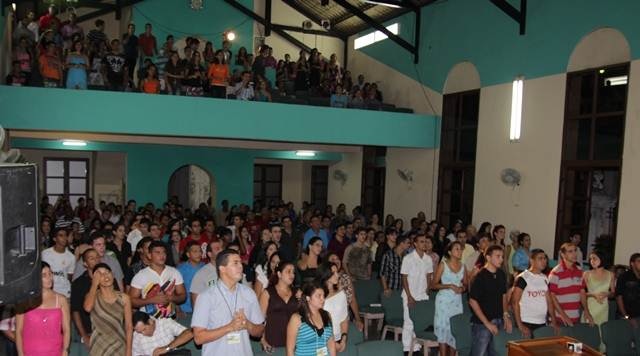
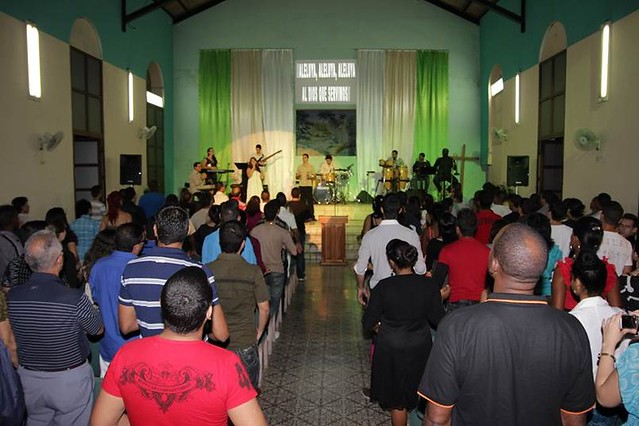
This week he and his team hosted a national youth leaders' summit for over 120 leaders from 40 churches all over the country. Here are two pictures from the event. It's so fun to see what God is doing there!